

15,000+ more clicks.
A better path to purchase.
A Shopify brand was leaning heavily on ads.
I rebuilt the organic strategy around people ready to buy.
For founders and CMOs looking beyond traffic totals: what I changed, what the evidence shows and where the catalogue can work harder next.
 DTC brand · Collection pages · Buying-intent SEO
135K 150K
Previous six months → last six months7.39M 9.5M
Same filtered comparisonOrganic revenue increased
Reported in the project summary, no figure supplied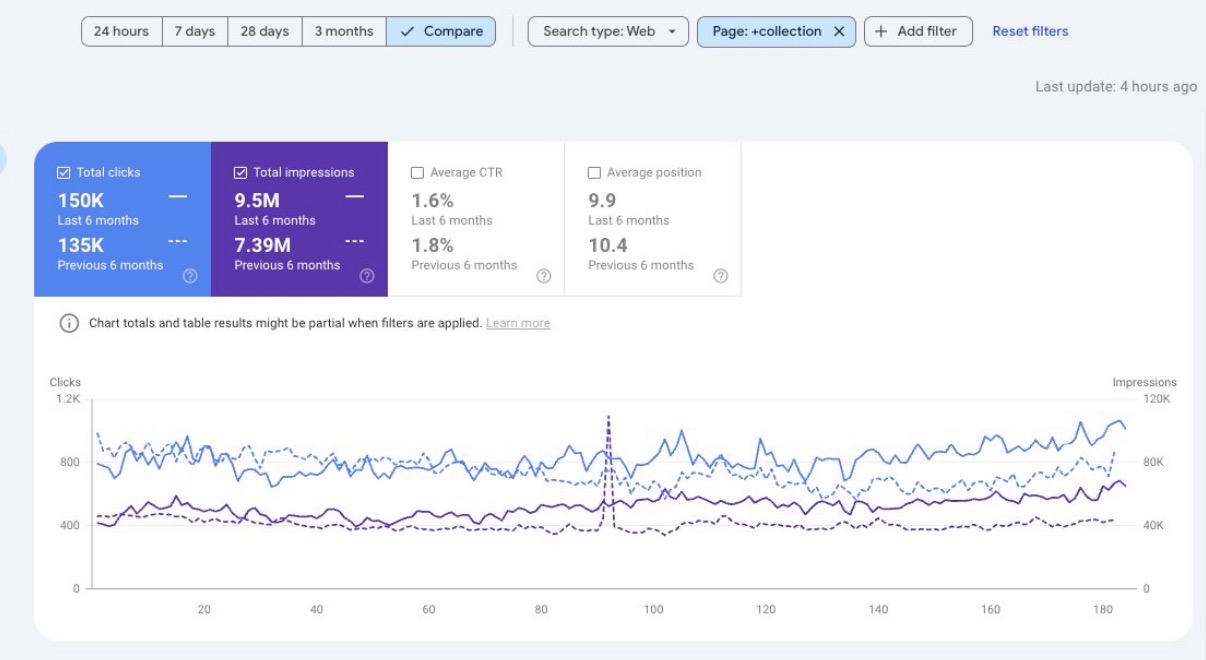
More ad spend wasn’t
fixing the buying journey.
The brand brought me in to fix its organic strategy. It had a familiar eCommerce problem: weak site architecture around how customers actually shop.
I found gaps in taxonomy, internal linking and content. Building pages around the customer journey was one of the biggest opportunities.
For a founder, that is a reason to examine the store before simply increasing the acquisition budget. For a CMO, it is a brief that connects SEO, merchandising and the buying experience.
From audit to published pages.
Find the gaps before adding more traffic.
I started with a custom audit of the store’s architecture, crawl patterns and page paths. I segmented top-selling products and checked what customers were actually looking for. That gave us a commercial starting point, not just a list of technical errors.
Priority: buying-intent pages and the products behind them.
More visibility.
Still a commercial test.
My project summary reported 15,000+ additional clicks to buying-intent pages. The screenshot shows 150K versus 135K collection-page clicks, roughly 15K more using the rounded totals.
Impressions increased from 7.39M to 9.5M and average position improved from 10.4 to 9.9. CTR fell from 1.8% to 1.6%, so the result is not an improvement in every metric.
Organic revenue increased, but no revenue amount or attribution breakdown was supplied. This comparison does not prove that every additional click came from the sprint, that profit increased or that paid-media dependence fell.
The next priority for this DTC brand was retention. More acquisition needs a plan for repeat orders, not just another traffic target.
Search. Shopping.
AI product discovery.
The case study measures Google Web search. Google Shopping SEO and ChatGPT shopping SEO are extensions to explore, not results I’m claiming for this brand.

Keep buying-intent pages at the centre.
This is the channel measured in the case study. Collections connect a shopper’s search to a relevant part of the catalogue.
- 01
Use Search Console to separate collection and product performance from blog traffic.
- 02
Compare relevant landing-page traffic with orders and organic revenue in your store analytics.
- 03
Review click-through rate alongside impressions. More visibility does not automatically mean more efficient acquisition.
Measured here: Web search collection-page clicks and impressions.
Start with the pages
closest to the sale.
If you’re a founder, ask where customers get stuck between searching and choosing. If you’re a CMO, ask whether your SEO roadmap reflects your catalogue priorities, not just your content calendar.
Then judge the work against relevant traffic, conversion, organic revenue and repeat purchasing. The right next step might be better collection pages, a cleaner feed or a stronger product page. It starts with your store’s evidence.
Louis Jordon SmithWhere is your buying
journey losing customers?
Let’s talk about your catalogue and what I’d look at first.
Book a free 20 min strategy call